

In the next 10 minutes I’m gonna get you playing your first real blues riff on harmonica, even if today is your first day ever touching one.
And by the way – I’m gonna make this really simple for you.
I’m gonna walk you through 5 steps that spell the word BLUES so that you don’t fall into the same traps that mess up most beginners. But first – let’s just get you playing something that already sounds like blues.
Grab your harmonica – if it says “C” on it, you’re good to go.
Don’t worry about anything else yet… just take a deep breath and follow me.
Put the harmonica in your mouth so it’s covering about the first 3 holes.
We’re gonna breathe normally, like we would if there wasn’t a harmonica in our mouth.
Nice and relaxed. Just breathe in…
…and out…
Good.
Now we’re gonna turn that into your first blues riff. Here’s your harmonica tabs:
-12 12 -1 12
If that sounded even a little bit like music…
Congrats—you just played your first blues riff.
That’s not messing around—that’s blues! Now let me show you how to make that sound actually good.
Most beginners play with their lips way too shallow on the cover plates, and that’s why…
B
Big Lips
The “B” in BLUES stands for Big lips.
Imagine that you feel like you just left the dentist… and your whole face is numb. You physically can’t tense up.
👉 Now put the harmonica deeper in your mouth—so it’s touching the moist inner part of your lips.
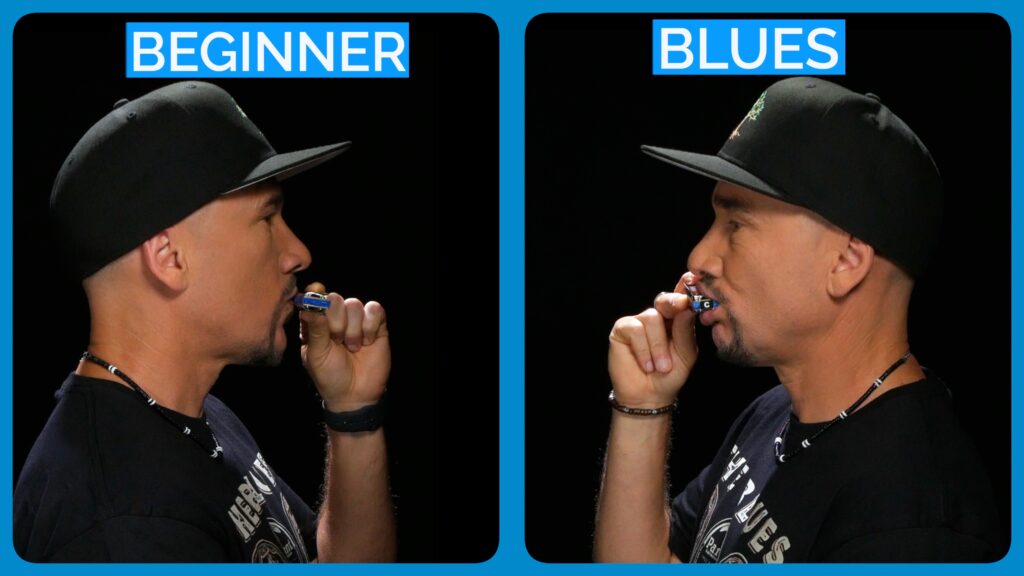
Relax everything. Now play that same riff again—
-12 12 -1 12
Hear the difference?
That’s the sound we want.
The other image I want you to remember is swallowing an egg. Your lips are protruding, the back of the tongue is down, the throat is as big and open as possible. This will give you the big fat tone that you want for blues.
Articulation
If you wanna challenge yourself and go next level, you could whisper “yudda” on each one of those.
-12 -12 12 12 -1 -1 12 12
Yudda Yudda Yudda Yudda
Alright—now let’s make another sound that already feels like blues. Try this with me—
👉 Put your mouth over holes 3 and 4 – anywhere above hole 2.
Now you might be noticing something… You can’t hold it very long…
You start to feel kinda… full of air.
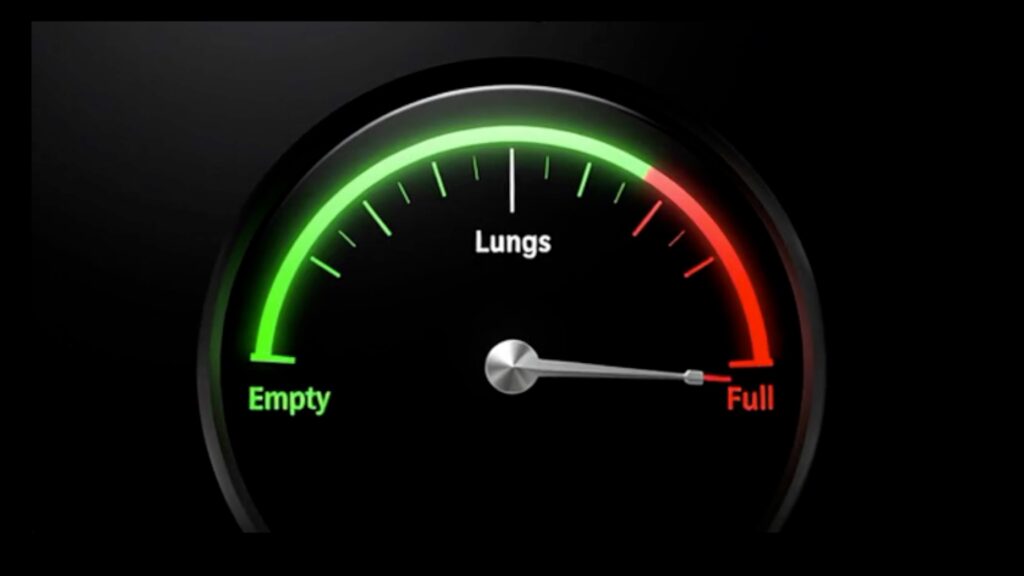
Good. That’s actually perfect. Because that right there is what trips up almost every beginner.
Blues harmonica is mostly breathing in so if you don’t manage your air… You’re gonna run out of room fast. And that’s why…
L
Lungs Empty
The “L” in BLUES stands for Lungs empty. Because 80% of Blues Harmonica is INHALES in the bottom 6 holes.
So whereas a singer takes a deep breath to sing “la-” we’re gonna do just the opposite. Think of it like a reverse gas tank.
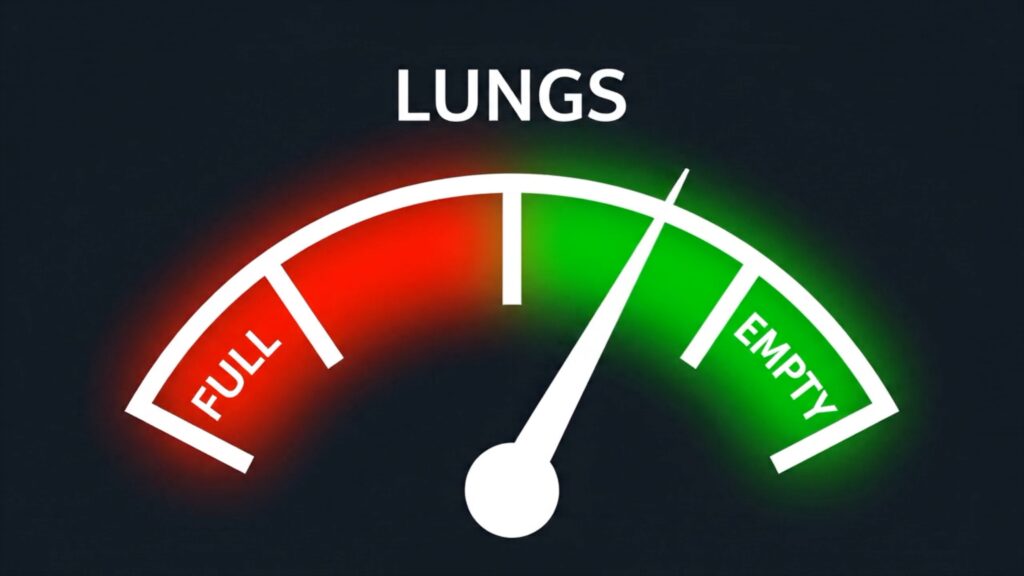
So instead of filling up to drive, we gotta take everything out to drive.
Or think of it like a viper coils before it strikes; we need to come down low before we play.
So we’re gonna try that same train whistle again, but this time…
Empty your lungs first.
You may want to sit down for this. Push all the air out of lungs. Empty yourself like you’re ringing out a sponge. Now draw.
Feels different, right? If it still feels weird—that’s normal. It’s counterintuitive.
This is one of the biggest unlocks for blues harmonica.
Now once that starts to feel a little easier, you can start to mess with the sound a bit. Try saying something like:
- OH-EE
- DOOWAH
- KYUH
While you’re drawing in. You might hear the note start to dip or growl a little. That’s called bending, and it’s an advanced technique. So if it’s not happening yet—don’t worry about it.
Just playing around with those sounds is already helping you! It’s all about having fun and exploring the sounds we can make with our mouth.
Now let’s make this sound even cooler with our hands.
👉 Take your left hand— Make kind of a “C” shape. Put the harmonica snug into that webbing between your thumb and index finger.
Now bring your right hand over it to seal it up—
Now to understand the cup grip:
- Place the knife end of your hands together
- Move your right hand up one digit on the pinky
- Fold down your left hand into the C shape
- Fold your right hand over the left hand, and notice there’s a tight seal against the edges of the hands.
- Now open your right hand to create the “wah” sound
Now try that with your train whistle — That’s it. Now you’re starting to sound like a blues player.
So remember: Before you play — Empty the lungs… Then draw in.
That one habit alone is gonna make everything else you learn work way better.
So now you’ve got a riff, you’ve got some tone… you’re starting to sound pretty cool already.
But if I’m being honest, just playing random stuff like this—It doesn’t quite feel like a song, does it?
It just sounds like… noise with confidence. So what’s missing?
U
Understand the Form
Blues isn’t random. It follows a simple pattern. Now don’t worry— you don’t need to memorize anything right now. I’m just gonna show you how to feel it.
I might throw out a few fancy words in this section. But you don’t have to remember them. Just stick with me. Remember that all of your favorite Blues artists use this story, and I promise you it’s gonna pay off if you hang in there with me.
Think of the Blues like a 3 part story:
➡️ Beginning…
➡️ Middle…
➡️ End.
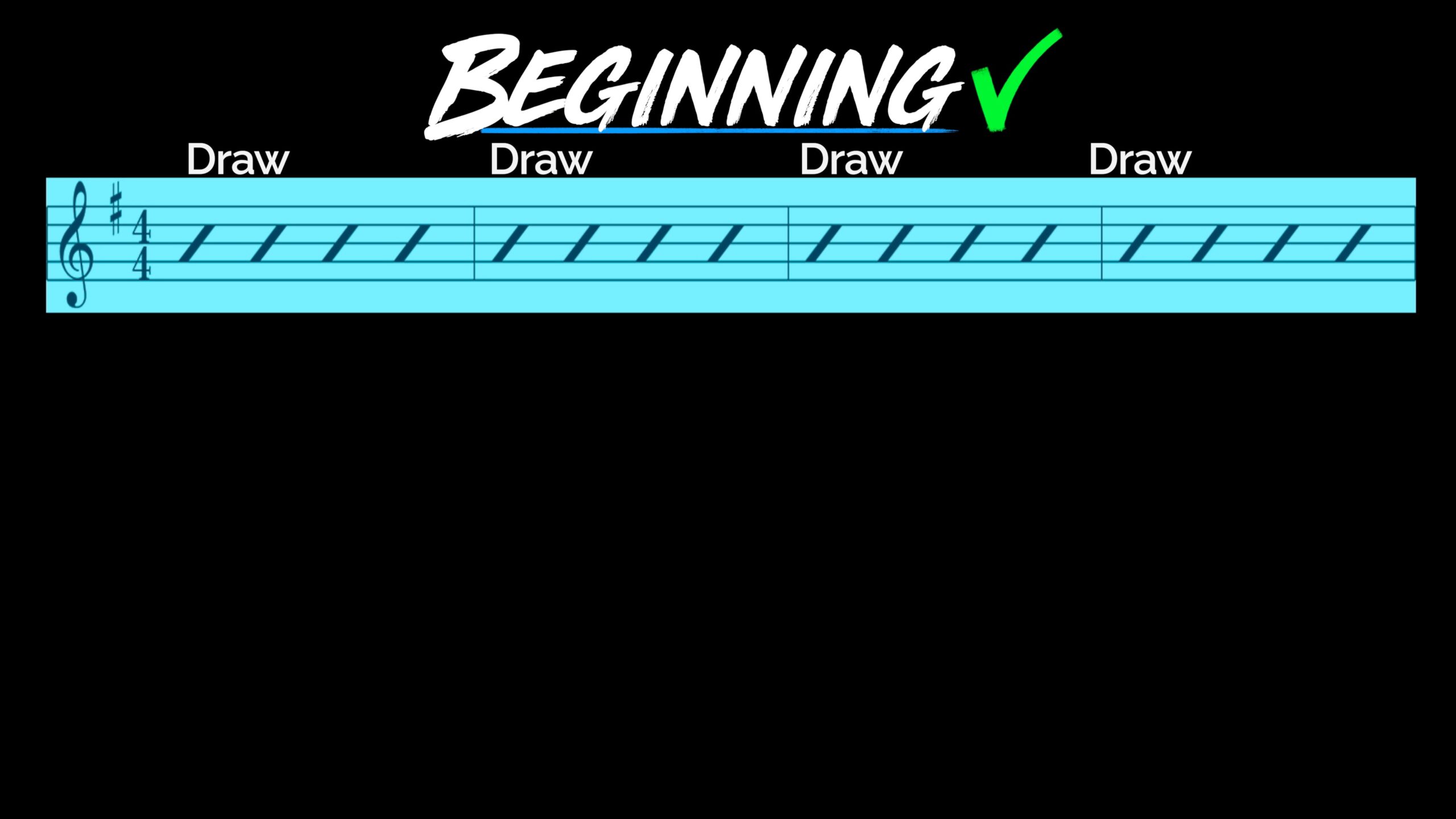
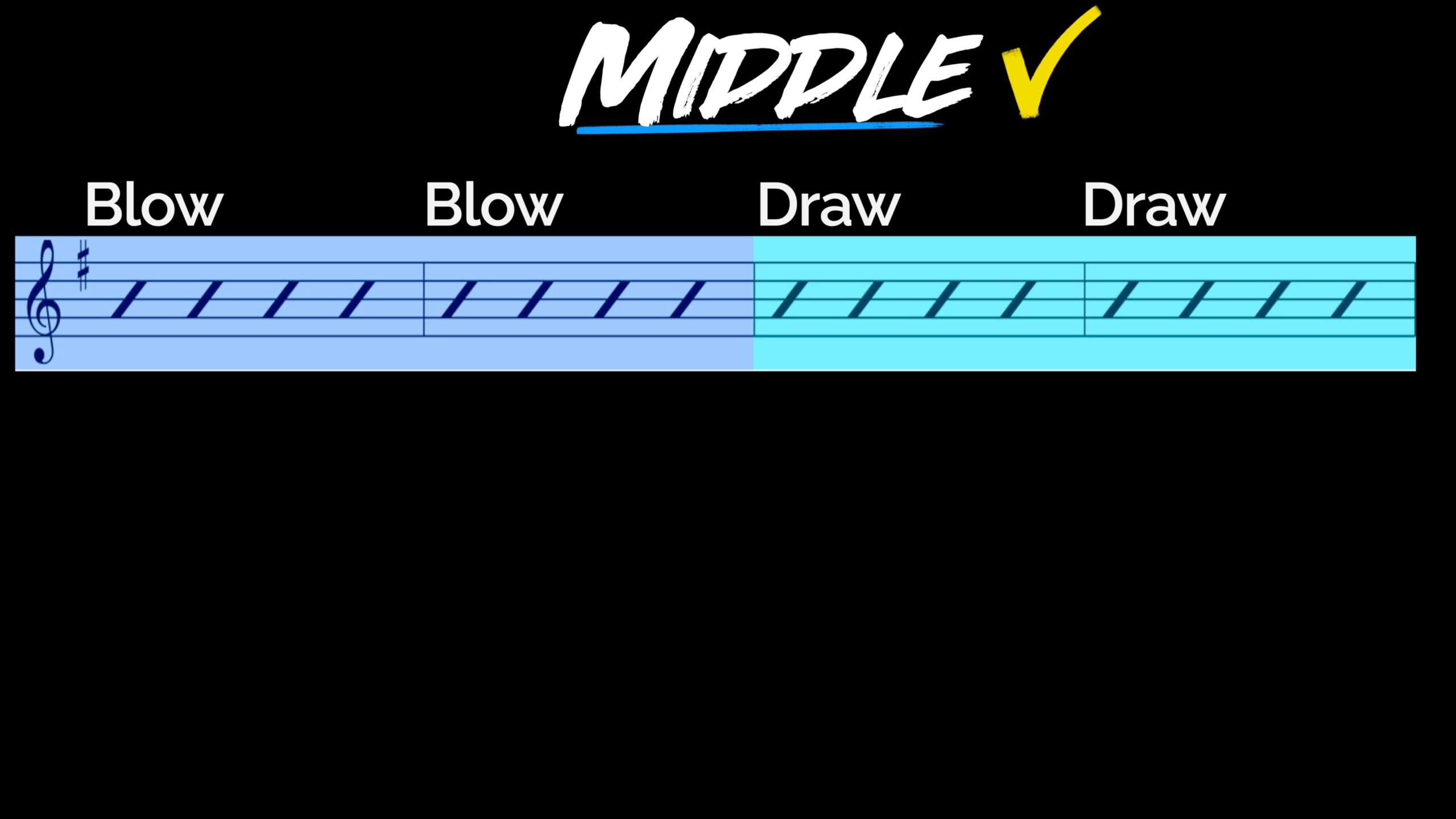
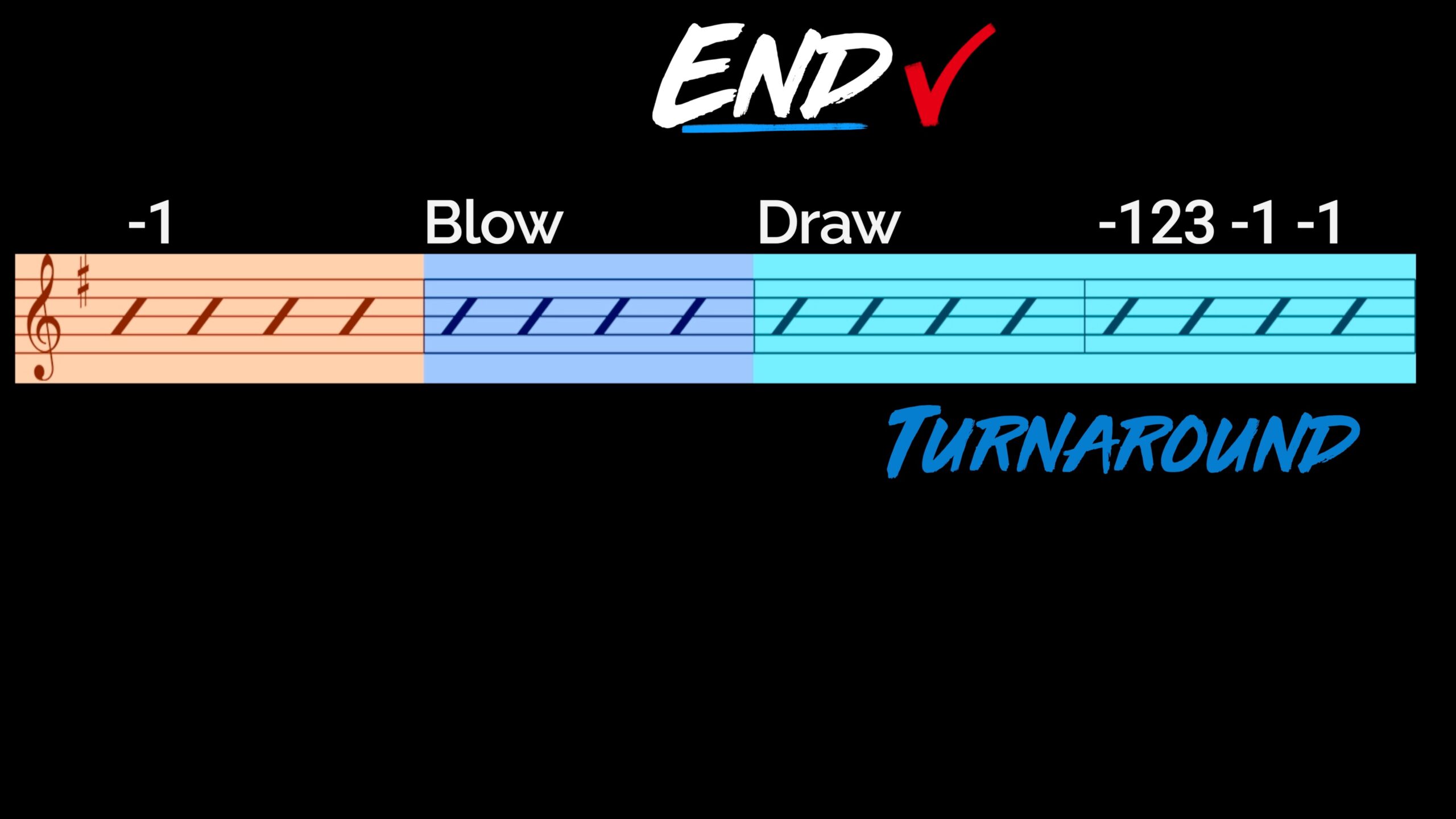
The beginning is super simple. We’re just gonna stay on that draw chord— the same sound we’ve already been playing.
Each one of these little segments is called a “bar” in which we count to 4. We’re gonna whisper “dah-dee” on each beat while breathing in:
-123 -123 -123 -123 -123 -123 123 123
Dah Dee Dah Dee Dah Dee Dah Dee
-123 -123 -123 -123 -123 -123 1123
Dah Dee Dah Dee Dah Dee Dah
That phrase lasts 2 bars so for our Beginning we will repeat it twice. That’s the beginning of the story.
Now the middle of the story adds a little movement.
We switch to the blow chord for 2 bars, before returning what we just did.
And on these blow chords, we’re gonna quickly catch an inhale when say “dee” right here at the end of the first bar, so it’ll sound like:
123 123 123 123 123 123 123 -123
Dah Dee Dah Dee Dah Dee Dah Dee
123 123 123 123 123 123 123 -123
Dah Dee Dah Dee Dah Dee Da
Then we go back to the draw chord for 2 bars, like in the beginning section.
Now the end of the story – this is where things get interesting.
The first bar here is the the climax of the story – We’re gonna play just our -1 here.
Don’t worry if it’s not perfect—close is good. Then we’ll have one bar of blow and then back to our draw we finish with a little turnaround… which just brings us back to the top.
That’s it. You don’t need to memorize anything. Just follow me.
That right there? That’s the 12-bar blues. That’s what turns random sounds… into actual music.
And if that felt a little messy—that’s completely normal. You’re doing something real right now. This is a POWERFUL thing to work on.
If you’ve only started playing recently, this is an AMAZING achievement.
If you’re feeling overwhelmed, that’s completely normal.
You’re learning a lot really fast right now. And this is where most beginners get stuck—not because they can’t do it… but because they’re not sure what to practice next.
So if you want a step-by-step path where you can just sit down, press play, and I guide you through what to work on—that’s exactly what I built in my Beginner to Boss course.
But let’s keep going, because now you’ve got something really important…
You can follow the form. You can stay in the structure. That’s huge.
But blues isn’t about just following… it’s about expressing.
And that’s why step 4 is…
E
Express the Form
And don’t worry—this doesn’t mean you have to play fast… or fancy… or hit perfect single notes.
We’re just gonna take what you already know… and make it sound more like music.
One of the easiest ways to do that—and something that most pro players recommend for beginners—is to use simple bassline patterns.
This is a riff that will grow with you over time, but today we’ll approach it like this:
-12 -23 -34 45 -45 45 -34 -23
This riff is all draws except for the 45, so we need to try and get as much air out our lungs as possible here, or we’re gonna overfill, so push air out your nose on the blow 45.
We’re gonna play our new riff everywhere we have the draw chord—and keep everything else the same. So the harmonica tabs for the entire 12-bar blues look like this:
-12 -23 -34 -45 45 -45 -34 -23
-12 -23 -34 -45 45 -45 -34 -23
123 123 123 123 123 123 123 -123
123 123 123 123 123 123 123 123
-12 -23 -34 45 -45 45 -34 -23
-1 -1 -1 -1 -1 -1 -1 -1
123 123 123 123 123 123 123 123
-12 -23 -34 45 -45 45 -123 -1 -1
If you want to challenge yourself you can do the “Dah-dee” articulations to give this a bounce like this or if you’re barely hanging on don’t worry about adding that in yet.
Think about this—You couldn’t do this 10 minutes ago! And now you’re playing the blues. 😎 🎶
This is enough blues material for you to work on for at least your first several weeks or months on harmonica. You just wanna keep focusing on:
👉 Big Lips…
👉 Lungs Empty…
👉 Understanding the Form…
👉 and Expressing the Form with this bassline.
Your B-L-U-E, blue baby.
Now—you might be thinking, “When do I learn single notes?”
S
Single Notes
“S” is for single notes and I’m intentionally putting that last.
Because if you rush into single notes too early—it’s very easy to mess up everything we just worked on… Especially those big, relaxed lips.
Once all of this feels easy, and natural… then you’re ready. So when you’re ready for that next step, check out my lesson on single notes for beginners.
You’re off to a really strong start! I’ll see you there.

'%3e%3cg id='Final-Copy-2_2_' transform='translate(1275.000000, 200.000000)'%3e%3cpath class='st0' d='M7.4,12.8h6.8l3.1-11.6H7.4C4.2,1.2,1.6,3.8,1.6,7S4.2,12.8,7.4,12.8z'/%3e%3c/g%3e%3c/g%3e%3c/g%3e%3cg id='final---dec.11-2020'%3e%3cg id='_x30_208-our-toggle' transform='translate(-1275.000000, -200.000000)'%3e%3cg id='Final-Copy-2' transform='translate(1275.000000, 200.000000)'%3e%3cpath class='st1' d='M22.6,0H7.4c-3.9,0-7,3.1-7,7s3.1,7,7,7h15.2c3.9,0,7-3.1,7-7S26.4,0,22.6,0z M1.6,7c0-3.2,2.6-5.8,5.8-5.8 h9.9l-3.1,11.6H7.4C4.2,12.8,1.6,10.2,1.6,7z'/%3e%3cpath id='x' class='st2' d='M24.6,4c0.2,0.2,0.2,0.6,0,0.8l0,0L22.5,7l2.2,2.2c0.2,0.2,0.2,0.6,0,0.8c-0.2,0.2-0.6,0.2-0.8,0 l0,0l-2.2-2.2L19.5,10c-0.2,0.2-0.6,0.2-0.8,0c-0.2-0.2-0.2-0.6,0-0.8l0,0L20.8,7l-2.2-2.2c-0.2-0.2-0.2-0.6,0-0.8 c0.2-0.2,0.6-0.2,0.8,0l0,0l2.2,2.2L23.8,4C24,3.8,24.4,3.8,24.6,4z'/%3e%3cpath id='y' class='st3' d='M12.7,4.1c0.2,0.2,0.3,0.6,0.1,0.8l0,0L8.6,9.8C8.5,9.9,8.4,10,8.3,10c-0.2,0.1-0.5,0.1-0.7-0.1l0,0 L5.4,7.7c-0.2-0.2-0.2-0.6,0-0.8c0.2-0.2,0.6-0.2,0.8,0l0,0L8,8.6l3.8-4.5C12,3.9,12.4,3.9,12.7,4.1z'/%3e%3c/g%3e%3c/g%3e%3c/g%3e%3c/g%3e%3c/svg%3e) Privacy Choices
Privacy Choices

Comments
Got something to say? Post a comment below.